 MEMBERSHIP LOGIN
Smaller Changes For Longer Life
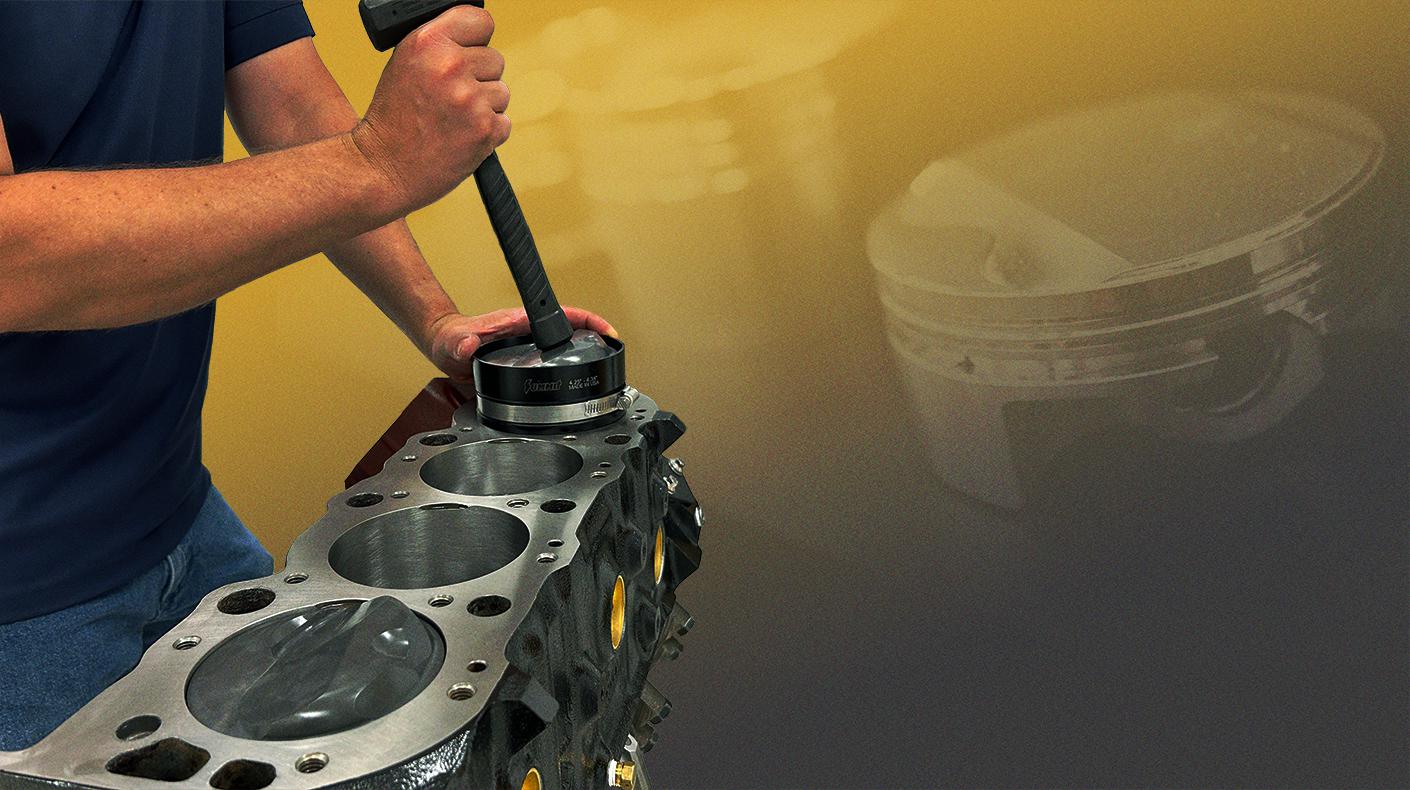
Many functional changes in piston design go unnoticed—as intended, according to Eric Grilliot of MAHLE Motorsport in Fletcher, North Carolina. "Our engineers will implement small changes to the ring placement on the piston. Or even the spacing between rings can evolve as usage and applications alter the loading on the piston," he said. "When problem areas are identified, the 'fix' is often subtle changes in thicknesses or the relative position of features and the transitions between them."
This evolutionary, not revolutionary, concept is expressed by other sources for this look at small changes in piston design, from crowns to coatings, ring lands to skirts.
Durability Advantage
For years, CP-Carrillo had wrist pins with a maximum 0.230-inch wall thickness on its LS/LT series pistons for ultra-high-horsepower applications. The pins were tasked with increasingly higher stress.
"On some of our LS stuff, we were getting 2,000 horsepower or more on a shelf part," said Rick "RC" Canning. "It wasn't even really made for that, but we make [the pistons] so heavy duty they could actually handle it."
The 0.230 pins met their threshold, however, at 2,000-plus hp, where some flex occurred. With that, several years ago, the Irvine, California, manufacturer began offering a 0.260-wall pin thickness for its Ultra Duty Line. It has been successful in stabilizing the piston.
"I tell people the wrist pin is like the foundation of your house," Canning explained. "It has to be very stout to keep the rest of the piston together."
He pointed out that pin flex has not been a problem with its lower-power street-strip pistons, so nothing changed there. "We don't go across every line of pistons and make these" changes, he said. "We take a segment of what we're actually working on, and that's what we change."
CP-Carrillo has also made design changes in the pin boss area in response to wider aluminum connecting rods, necessitating a wider cut in the piston for very high-horsepower drag racing applications in the sport compact market.
The resulting heavy-duty turbo "T" forging pistons are "specifically designed with extra material contouring and supporting the pin boss area so that even if a big chunk of material is taken out for aluminum rods, it's still very strong in that area," added Tony Calvert.
Power-adder applications have affected the design of pistons sold by PBM Performance Products in Louisville, Kentucky. That includes lowering the top ring groove and upgrading to heavy-duty wrist pins. "In power-adder applications, if the top ring groove is too close to the deck surface, the increased cylinder pressure can collapse the area between the ring grooves," said Russell Byriel. "Heavy wall pins are a great upgrade to help with strength and reduce flex."
Reinforced pin boss design is also important on high-rpm, high-load engines, while thicker crown designs, thermal coatings, and ring gap design changes "all increase longevity," he added.
PBM Performance's own Forged Power Pistons, made from 4032 alloy, are designed for circle track, street performance, and drag racing applications in big block and small block Chevys and small block Fords. Byriel pointed out design features that include round wire locks that distribute side load over the entire pin area, thereby increasing piston strength, and slipper skirt design that reduces reciprocating mass but maintains the rigidity and strength of a full skirt.
Grilliot at MAHLE discussed design advantages promoted for its PowerPak piston and ring kits. These are used in high-horsepower engines, such as high-performance enthusiast and sportsman class racers, with or without nitrous. Among the features are anodized ring grooves to protect against micro-welding, which happens when aluminum particles of the ring-groove bore transfer to the ring.
"This often causes the piston ring to stick in the ring groove, causing ring-sealing issues along with excessive blow-by and loss of power," he said.
Micro-welding can occur when the top ring is moved closer to the top of the piston to make more power. "By hard-anodizing the ring groove in many PowerPak applications, the piston can see improved abrasion and wear resistance to micro-welding," Grilliot added.
To read the full article, plus hundreds of other articles like it for free, sign up for a digital subscription to PRI Magazine on Zinio here.
Once you download the Zinio mobile app or are logged into Zinio on a desktop browser, you will gain immediate access to more than a year's worth of content, including "Smaller Changes For Longer Life" here and additional coverage in the May/June 2026 issue here.