 MEMBERSHIP LOGIN
 JOIN PRI
IndyCar: Leena Gade Joins Schmidt Peterson, 2018 Car Unveiled
Image
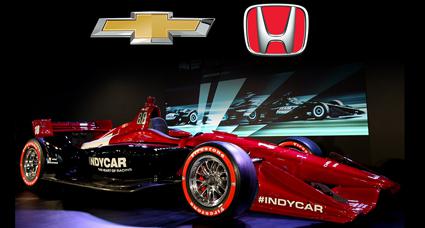
(Image of the 2018 car courtesy of INDYCAR).
Schmidt Peterson Motorsports (SPM) announced that Leena Gade, who shepherded Audi to three overall wins at the 24 Hours of Le Mans, has joined the team as race engineer for the No. 5 Arrow Electronics Honda and driver James Hinchcliffe.
The Briton’s appointment to SPM marks the first time a female will serve as a lead race engineer in the Verizon IndyCar Series. Diane Holl engineered drivers Adrian Fernandez, Tony Kanaan (Tasman Motorsports) and Richie Hearn (Della Penna Motorsports) in the CART series from 1996-2000.
“I’m really honored that I’ve got a chance to come across and work in INDYCAR. When I was a kid, I used to watch Indy car (racing), especially when Nigel Mansell first came over (in 1993), and I followed it quite a lot,” Gade said. “I’m quite honored to be given the chance. It is going to be something completely different to anything I’ve ever done before, so it’s a big learning curve, but it’s a challenge that I’m really relishing, so I’m looking forward to it.”
For more information on the appointment, visit here.
In related news, Verizon IndyCar officials have unveiled the new 2018 race car at the North American International Auto Show at Cobo Center.
Verizon IndyCar Series teams recently commenced with testing the new car, which has a reshaped design that decreases the level of downforce and shifts the weight balance more toward the front of the car.
Changes to the “Coke bottle-shaped” car, among other things, less reliance on the front wing, moving the sidepods forward for increased driver protection and lowering the floor while removing about 35 pounds from the rear.
A panel including current drivers and legendary owner Roger Penske asserted the result should provide more entertaining racing in safer machines. Penske was quick to mention how the car will help teams contain costs.
“We can take our existing chassis and put this aero kit on it and, instead of spending $400,000 or $500,000 for a car, these kits are somewhere between $100,000 and $200,000, and it gives us the ability to go to the next step,” Penske said.
The new car and aero kit plan—which INDYCAR’s President of Competition and Operations Jay Frye said runs through 2020 with an option year in 2021—is also conducive to attracting other engine manufacturers. Honda and Chevrolet have been in engine competition since 2012, and each took on the added expense of competitive aero kit development the past three years before INDYCAR opted to move toward the universal kit for 2018.
“We’d like to thank Chevrolet and Honda for all their support; it's phenomenal,” Frye said.
For more information on the unveiling, visit here.
Schmidt Peterson Motorsports (SPM) announced that Leena Gade, who shepherded Audi to three overall wins at the 24 Hours of Le Mans, has joined the team as race engineer for the No. 5 Arrow Electronics Honda and driver James Hinchcliffe.
The Briton’s appointment to SPM marks the first time a female will serve as a lead race engineer in the Verizon IndyCar Series. Diane Holl engineered drivers Adrian Fernandez, Tony Kanaan (Tasman Motorsports) and Richie Hearn (Della Penna Motorsports) in the CART series from 1996-2000.
“I’m really honored that I’ve got a chance to come across and work in INDYCAR. When I was a kid, I used to watch Indy car (racing), especially when Nigel Mansell first came over (in 1993), and I followed it quite a lot,” Gade said. “I’m quite honored to be given the chance. It is going to be something completely different to anything I’ve ever done before, so it’s a big learning curve, but it’s a challenge that I’m really relishing, so I’m looking forward to it.”
For more information on the appointment, visit here.
In related news, Verizon IndyCar officials have unveiled the new 2018 race car at the North American International Auto Show at Cobo Center.
Verizon IndyCar Series teams recently commenced with testing the new car, which has a reshaped design that decreases the level of downforce and shifts the weight balance more toward the front of the car.
Changes to the “Coke bottle-shaped” car, among other things, less reliance on the front wing, moving the sidepods forward for increased driver protection and lowering the floor while removing about 35 pounds from the rear.
A panel including current drivers and legendary owner Roger Penske asserted the result should provide more entertaining racing in safer machines. Penske was quick to mention how the car will help teams contain costs.
“We can take our existing chassis and put this aero kit on it and, instead of spending $400,000 or $500,000 for a car, these kits are somewhere between $100,000 and $200,000, and it gives us the ability to go to the next step,” Penske said.
The new car and aero kit plan—which INDYCAR’s President of Competition and Operations Jay Frye said runs through 2020 with an option year in 2021—is also conducive to attracting other engine manufacturers. Honda and Chevrolet have been in engine competition since 2012, and each took on the added expense of competitive aero kit development the past three years before INDYCAR opted to move toward the universal kit for 2018.
“We’d like to thank Chevrolet and Honda for all their support; it's phenomenal,” Frye said.
For more information on the unveiling, visit here.