 MEMBERSHIP LOGIN
 JOIN PRI
Toyota Hopes To Rebound With TS050
Image
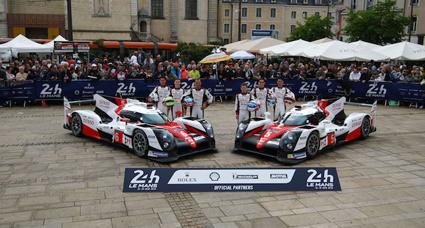
The Toyota Hybrid LMP1 team came tantalizingly close to earning the Japanese giant's first overall win at the 24 Hours of Le Mans in 2014, and after a thorough drubbing last year by Porsche and Audi, the squad has pinned its hopes on an all-new challenger to restore its status as a serious contender.
Inside the all-new TS050 chassis, the former naturally-aspired V8 engine has been replaced by a stout twin-turbo V6 powerplant, and after extracting the full potential from its 6 megajoules super capacitor-based energy recovery system, it has been swapped for a battery-based 8 MJ unit.
A fresh approach to aerodynamics is also visible with the TS050, and the car carries the full weight of Toyota's long-held ambition to conquer Le Mans.
"The car felt pretty good straight away when we hit the track," said Anthony Davidson, who shares the No. 5 TS050 with Sebastien Buemi and Kaz Nakajima. "The Le Mans package felt comfortable straight away. And all the drivers were fairly happy. And it is great when that happens; it allows you to work on a details, the set up and tuning, and choosing which downforce level you think is going to be for the race.
"The car is performing well in the braking and we had no traction problems, so it was a nice comfortable car to take into the 24-hour race, I'd would say. In terms of the engine package, after last year, it's certainly nice to drive a quieter engine around the track. So much of it is done at full throttle, it can be quite deafening experience. Back in the day for the V8 engines ... obviously you want some sound from an engine but last year's was pretty raucous."
The No. 5 Toyota was fifth fastest overall in Wednesday's practice, just one notch below the No. 6 driven by Stephane Sarrazin. But toward the end of the session, Sarrazin clouted the barrier, damaging the bodywork on the front of his LMP1 Hybrid machine. Prior to his crash, Sarrazin posted the fourth-fastest time (3m23.158s).
The 5 car was the fastest of the brand's two entries during the test day, but with a gap of 1.8 seconds to the leading Audi R18, there's more development work to do, and speed to be found, before it can plan to blow past its rivals.
Along with the TS050, Audi's latest R18 is a clean-sheet design, barring its familiar turbodiesel engine, and Porsche made a last-minute decision to revert to its 2015 ERS battery, which raises the question of reliability for all three LMP1 Hybrid manufacturers. Le Mans is relentless, and loves to break cars that show even the slightest hint of weakness.
Bridging that 1.8s gap between the test and the race is unrealistic, but with all three teams facing the possibility of spending time in the garage making repairs, Davidson sees reliability as a potential equalizer this year.
"I think the teams can't be 100 percent confident this year of reliability," he said. "I think even Porsche, that most tried and tested package of all of us, it has to revert back to the 2015 battery – because nobody's safe. We are all pushing each other harder than ever before and we're all reaching the peak of that pyramid of performance more and more all the time. That means there's very little scope of anymore bigger gains to find. By doing that, it means you have to take risks in terms of fragility and reliability."
And there's one more factor to consider when it comes to the questionable reliability of the LMP1 Hybrid field. With almost a 50 percent reduction in cars from 2015, each manufacturer has a smaller margin of error to maintain. With three Audis and three Porsches vying for last year's win, losing a car or two—at least by the number—left each brand with a solid backup plan to fight for victory.
Audi and Porsche have only brought two cars apiece in 2016, and with the two Toyota TS050s completing the six-car LMP1 Hybrid grid, poor reliability could wipe out one manufacturer while helping another.
"I think if you haven't got the fastest car, like we're not going to have this year, it does certainly become less of a disadvantage when there are other faster cars out there, that have the same amount of [cars] that you do," Davidson surmised. "If you're going into the race with the slowest car and you are trying to beat six or seven cars that are faster than you, you're going to be praying for all of those cars to break down.
"Whereas this year, with four other cars out there that our team is trying to beat, it means that the odds are better. The chance of four cars breaking down is much higher than all six cars breaking down last year. The best solution is having the fastest and most reliable car and staying out of trouble."
Come 3 p.m. Sunday in France, the best solution, whatever it is—one that might not be the fastest or most dominant—will be celebrating in France.
Inside the all-new TS050 chassis, the former naturally-aspired V8 engine has been replaced by a stout twin-turbo V6 powerplant, and after extracting the full potential from its 6 megajoules super capacitor-based energy recovery system, it has been swapped for a battery-based 8 MJ unit.
A fresh approach to aerodynamics is also visible with the TS050, and the car carries the full weight of Toyota's long-held ambition to conquer Le Mans.
"The car felt pretty good straight away when we hit the track," said Anthony Davidson, who shares the No. 5 TS050 with Sebastien Buemi and Kaz Nakajima. "The Le Mans package felt comfortable straight away. And all the drivers were fairly happy. And it is great when that happens; it allows you to work on a details, the set up and tuning, and choosing which downforce level you think is going to be for the race.
"The car is performing well in the braking and we had no traction problems, so it was a nice comfortable car to take into the 24-hour race, I'd would say. In terms of the engine package, after last year, it's certainly nice to drive a quieter engine around the track. So much of it is done at full throttle, it can be quite deafening experience. Back in the day for the V8 engines ... obviously you want some sound from an engine but last year's was pretty raucous."
The No. 5 Toyota was fifth fastest overall in Wednesday's practice, just one notch below the No. 6 driven by Stephane Sarrazin. But toward the end of the session, Sarrazin clouted the barrier, damaging the bodywork on the front of his LMP1 Hybrid machine. Prior to his crash, Sarrazin posted the fourth-fastest time (3m23.158s).
The 5 car was the fastest of the brand's two entries during the test day, but with a gap of 1.8 seconds to the leading Audi R18, there's more development work to do, and speed to be found, before it can plan to blow past its rivals.
Along with the TS050, Audi's latest R18 is a clean-sheet design, barring its familiar turbodiesel engine, and Porsche made a last-minute decision to revert to its 2015 ERS battery, which raises the question of reliability for all three LMP1 Hybrid manufacturers. Le Mans is relentless, and loves to break cars that show even the slightest hint of weakness.
Bridging that 1.8s gap between the test and the race is unrealistic, but with all three teams facing the possibility of spending time in the garage making repairs, Davidson sees reliability as a potential equalizer this year.
"I think the teams can't be 100 percent confident this year of reliability," he said. "I think even Porsche, that most tried and tested package of all of us, it has to revert back to the 2015 battery – because nobody's safe. We are all pushing each other harder than ever before and we're all reaching the peak of that pyramid of performance more and more all the time. That means there's very little scope of anymore bigger gains to find. By doing that, it means you have to take risks in terms of fragility and reliability."
And there's one more factor to consider when it comes to the questionable reliability of the LMP1 Hybrid field. With almost a 50 percent reduction in cars from 2015, each manufacturer has a smaller margin of error to maintain. With three Audis and three Porsches vying for last year's win, losing a car or two—at least by the number—left each brand with a solid backup plan to fight for victory.
Audi and Porsche have only brought two cars apiece in 2016, and with the two Toyota TS050s completing the six-car LMP1 Hybrid grid, poor reliability could wipe out one manufacturer while helping another.
"I think if you haven't got the fastest car, like we're not going to have this year, it does certainly become less of a disadvantage when there are other faster cars out there, that have the same amount of [cars] that you do," Davidson surmised. "If you're going into the race with the slowest car and you are trying to beat six or seven cars that are faster than you, you're going to be praying for all of those cars to break down.
"Whereas this year, with four other cars out there that our team is trying to beat, it means that the odds are better. The chance of four cars breaking down is much higher than all six cars breaking down last year. The best solution is having the fastest and most reliable car and staying out of trouble."
Come 3 p.m. Sunday in France, the best solution, whatever it is—one that might not be the fastest or most dominant—will be celebrating in France.