 MEMBERSHIP LOGIN
 JOIN PRI
Clemson University Prototype Program Announces Next-Generation Rallycross Vehicle
Image
(Photo courtesy of CU-ICAR).
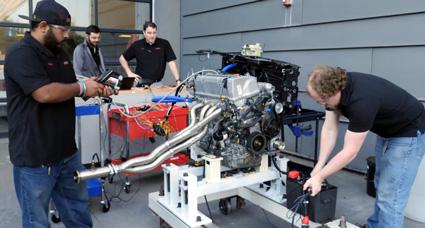
A group of graduate students at the Clemson University International Center for Automotive Research (CU-ICAR) called the Deep Orange 9 is building the “first-ever, high-performance, ultra-tough” motorsports vehicle with a clean, fuel-efficient hybrid powertrain, advanced technical features and highly dynamic handling and acceleration.
The fuel-efficient rallycross concept is in response to rising fuel-efficiency standards and millennials’ interest in vehicles that are both safe and clean, according to Clemson.
Honda R&D Americas is the primary sponsor of Deep Orange 9, also supported by Aisin Group and JTEKT Corporation as Leadership Sponsors; BFGoodrich as Track Sponsor; and Red Bull and the Specialty Equipment Market Association (SEMA) as Marketing Sponsors. Deep Orange 9 will also integrate unique concussion research in collaboration with the Spartanburg Regional Healthcare System (SRHS) Sports Medicine Institute, DriveSafety Inc. and EyeTracking Inc.
“Honda R&D Americas is excited to support the next generation of engineering talent through CU-ICAR’s one-of-a-kind student program,” David Thompson, chief engineer at Honda R&D Americas, said to the Clemson Newsstand. “We look forward to seeing how the dreams and innovations of these Deep Orange 9 students can reshape motorsport vehicles, ensure customer safety, improve our environment and increase joy for future generations.”
Most global rallycross cars feature internal combustion engines to meet the power and agility needs of the sport. As a hybrid vehicle, Deep Orange 9 will “disrupt” current perceptions of energy-efficient vehicles by showing they can meet extreme performance demands in a safe, economical way, according to Clemson.
Over two years, the Deep Orange program provides students with experience in financial and market analysis, vehicle design, development, prototyping and production planning. While developing and manufacturing the prototype, students gain comprehensive technical knowledge as well as valuable “soft skills” that often are overlooked in traditional engineering programs.
A group of graduate students at the Clemson University International Center for Automotive Research (CU-ICAR) called the Deep Orange 9 is building the “first-ever, high-performance, ultra-tough” motorsports vehicle with a clean, fuel-efficient hybrid powertrain, advanced technical features and highly dynamic handling and acceleration.
The fuel-efficient rallycross concept is in response to rising fuel-efficiency standards and millennials’ interest in vehicles that are both safe and clean, according to Clemson.
Honda R&D Americas is the primary sponsor of Deep Orange 9, also supported by Aisin Group and JTEKT Corporation as Leadership Sponsors; BFGoodrich as Track Sponsor; and Red Bull and the Specialty Equipment Market Association (SEMA) as Marketing Sponsors. Deep Orange 9 will also integrate unique concussion research in collaboration with the Spartanburg Regional Healthcare System (SRHS) Sports Medicine Institute, DriveSafety Inc. and EyeTracking Inc.
“Honda R&D Americas is excited to support the next generation of engineering talent through CU-ICAR’s one-of-a-kind student program,” David Thompson, chief engineer at Honda R&D Americas, said to the Clemson Newsstand. “We look forward to seeing how the dreams and innovations of these Deep Orange 9 students can reshape motorsport vehicles, ensure customer safety, improve our environment and increase joy for future generations.”
Most global rallycross cars feature internal combustion engines to meet the power and agility needs of the sport. As a hybrid vehicle, Deep Orange 9 will “disrupt” current perceptions of energy-efficient vehicles by showing they can meet extreme performance demands in a safe, economical way, according to Clemson.
Over two years, the Deep Orange program provides students with experience in financial and market analysis, vehicle design, development, prototyping and production planning. While developing and manufacturing the prototype, students gain comprehensive technical knowledge as well as valuable “soft skills” that often are overlooked in traditional engineering programs.