 MEMBERSHIP LOGIN
Risk Mitigation: Race Track Safety
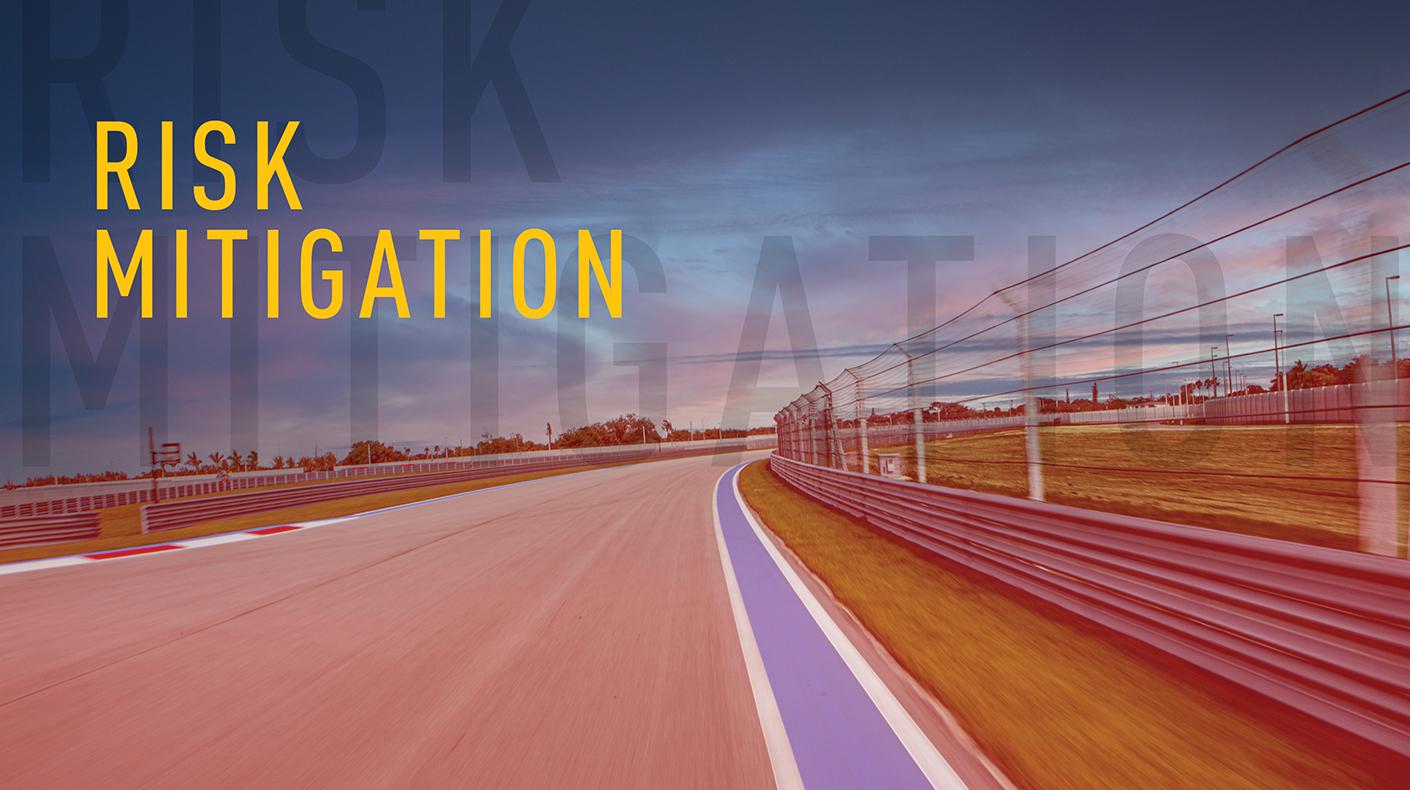
Risk has always been an inherent part of motorsports.
Daring moves executed successfully live in immortality—Ayrton Senna's legendary opening lap of the 1993 European Grand Prix, Alex Zanardi's last-lap pass in the Corkscrew at Laguna Seca in 1996, or Dale Earnhardt's "Pass in the Grass" at Charlotte Motor Speedway in 1987. A driver's ability to find the edge of control, momentarily cross that line, and come back with the trophy is part of what makes motorsports thrilling for fans and competitors alike.
From the world stage of Formula 1 to the local dirt track, the racer's mentality is largely similar: to accept the risk, attempt the bold move, and win the race.
Unfortunately, not every move is executed successfully. When a driver loses control, the laws of physics take charge, and unpredictable outcomes are unleashed.
"People will say, 'Ah, that'll never happen,' but never is a really long time," said Tyler Bachman of Volusia Speedway Park, De Leon Springs, Florida. "You always need to be prepared for the unknown."
The lens of motorsports safety is often focused on the driver, but track safety equipment and preparation are responsible for keeping everyone safe—drivers, officials, team members, and spectators.
At Volusia Speedway, the half-mile dirt track that hosts the opening round of the World of Outlaws Sprint Car season, this responsibility for fan safety led to an investment in a higher catch fence that goes around the entire track.
"The competitor knows the risk they're taking when they get on that racetrack," said Bachman. "But the spectators are there to enjoy a show and not to be in danger. Our biggest thing is to make sure those cars stay on the racing surface, and we don't hurt any fans."
Track safety renovations are especially important at historic tracks, such as Willow Springs Raceway in Rosamond, California. First opened in 1953, the legendary "Fastest Road in the West" was recently sold to new ownership, which tasked Speedway Motorsports Inc. (SMI) with operating and upgrading the historic property.
"The biggest issue you have with older facilities is the cars running on them today are much more capable of going a lot faster," said Rick Fedrizzi of Willow Springs Raceway. "So you always have to think that if it goes wrong, where's the potential for it to happen? What are the impact zones? How far off will a car go based on the speed it's traveling? It ends up being a lot farther than you think."
The safety renovations are being completed in phases, but upgrades to the Streets of Willow Springs course have already made an impact.
"We had a situation this past weekend where a car went off coming down the backstretch and made contact with a new guardrail," said Fedrizzi. "If the guardrail hadn't been there, it would have gone onto turn two, opposite direction of oncoming traffic. So people ask, why did you put guardrails up there? Keeping cars where they need to be, in case they go where they're not supposed to go."
From dirt circle tracks to paved road courses, every racing facility can mitigate risk through careful preparation and appropriate use of track safety equipment. While high-end solutions like SAFER barriers and FIA-homologated catch fences are ideal, grassroots tracks can still find affordable solutions that make a real difference.
Motorsports will always carry an element of risk. The challenge for track operators is to plan for every possible scenario when that risk is realized.
"You'll think there's no way a car will get that far, but then reality hits," said Fedrizzi. "Maybe you never think it's going to happen, but you've got to plan for it."
First Priorities
Willow Springs is a perfect case study for track operators looking to upgrade safety equipment at their facility. Fedrizzi and SMI took over operations of the formerly family-run track in spring 2025.
"We came in and just tried to understand how it was being operated, what was in place, and identified what areas needed to be addressed first," said Fedrizzi.
The first priority was to upgrade the aging fire and safety response equipment. "We addressed that immediately and invested in all new trucks, with ESI Track Fire/Rescue Skids with state-of-the-art fire suppression racks that went in the back of the trucks," said Fedrizzi.
They also worked with local fire departments to identify personnel and build a fire and safety operations team. With the fire safety team brought up to standard, the team shifted focus to the track itself.
"The first project, which is still ongoing, was the addition of tire packs and tire barriers in strategic places that were not protected," said Fedrizzi. "The decision making is based on years of experience with Steve Swift and the SMI team saying, 'Where are the potential areas for impact? Let's protect those first.'"
The idea of minimizing potential impact points was echoed by Bachman. "One thing we've done is change walls so there's no blunt ends," he said. "You just want to make sure there's nothing for a car to hit straight on."
While larger track projects may require significant time and resources, Bachman encouraged track operators to start with something manageable. "Try to fix your fence where the people are. If your fence is in good shape, maybe you need to run some cables to keep cars in."
Ensuring the readiness of a track's fire and rescue team should also be a top priority.
"Our safety buggies carry an AMKUS Rescue battery cutter tool, Enforcer 10s with a great foaming agent for fires, and we have a backboard on there," said Bachman. "Just making sure we're prepared and ready because the unknown is going to happen. When somebody says it'll never happen at my track, it's not true."
To read the full article, plus hundreds of other articles like it, for free, sign up for a digital subscription to PRI Magazine on Zinio here.
Once you download the Zinio mobile app or are logged into Zinio on a desktop browser, you will gain immediate access to more than a year's worth of content, including this article here and additional coverage in the March/April 2026 issue here.