Performance Backbone: Trends, Technologies and Demands Shaping the Next Gen of Engine Blocks
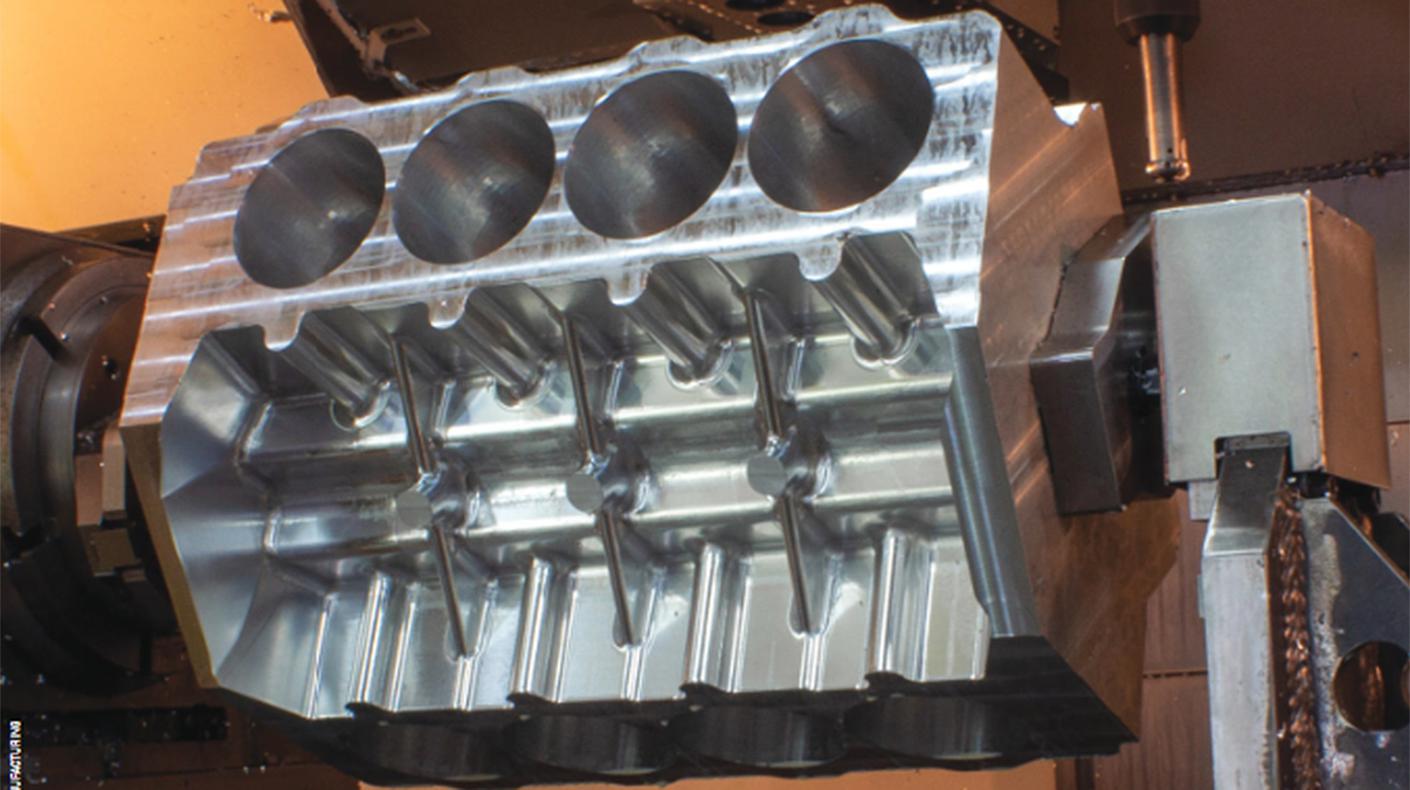
While there's still no clear resolution to the pandemic-related foundry chaos engulfing some manufacturers of iron cylinder blocks, signs point to continued new-product development in this vital aftermarket segment.
"Brodix is in the final stages of the development and production of an LS-compatible engine block. We currently have the engine block in testing and will evaluate the results soon," said Mark Fretz of Brodix, Mena, Arkansas.
"Our 1SPEC EOS block is the newest in our lineup," said Scott Patton of 1SPEC, a subsidiary of M&M Competition Engines in Franklin, Indiana. "It is a highly modified cast-iron block for the Gen 1 SBC platform and is available in both a short deck (8.000- to 8.500-inch) version as well as a mid-deck with an 8.500- to 9.025-inch height."
"We have some new avenues we're pursuing but not ready to announce yet, including aluminum, iron, and billet," added Steve Rhodey of Dart Machinery, Warren, Michigan. "These are totally new markets we've been working on and have been benchmarking for the past several months."
Increasing Supplies
While every component of an engine build is critical, no project can start until the cylinder block is in the shop and prepped to receive the parts. However, in the past five years, there have been on-and-off shortages of popular blocks, especially iron blocks used in sportsman racing and budget street builds.
The problem started during the pandemic, when hot rodders and racers were sent home, and the government poured a couple trillion dollars into the economy. People revived dormant projects or started building new racecars. That generated a tremendous demand for product, but some of those sent home were working at iron foundries in the US—foundries that had contracts with aftermarket companies. That void sent companies scrambling to find alternative foundries, which required new tooling.
"It really is hard to find a cast-iron foundry with the ability to pour something the size of a block," noted Dan Bolling of World Products, Louisville, Kentucky. "You can find smaller foundries for small items, but there are only a couple big iron foundries that can handle the volume."
Then the First Brands investment group, which controls Fram, Raybestos, and other automotive companies, started acquiring foundries only to file for bankruptcy later. One foundry affected by the First Brands implosion was the Dalton Corporation in Warsaw, Indiana. Dalton has long been associated with aftermarket block manufacturers because the century-old gray-iron foundry was perfect for the performance market. It's capable of complex, highly cored castings and has nearly 100,00 tons/year melting capacity. In addition to serving a variety of interests, it had carved out a niche that was capable of pouring performance-geared cylinder blocks in quantities that didn't have to compete with OEM volumes.
Work at Dalton had been sporadic until casting operations finally ceased in April 2026. There is talk of a new buyer who may acquire the foundry assets with the intention of restarting operations, and those whispers are giving cautious optimism to the aftermarket.
"We've heard Dalton will be back online, but we just don't have a clear timeline," said Rhodey. "We have transitioned our SHP Chevy block to a foundry in Germany. That supply is now consistent, and the quality is very good. We're currently manufacturing numerous blocks per day, and we're getting our second shift back. But until that Indiana foundry fires up, we're not going to have all our offerings. Aluminum blocks, no issue. We've got good supply and machine capacity."
World Products currently has limited inventory of its iron blocks but has worked with engine builders to make adjustments and keep the builds alive. "Engine builders are flexible. If we've got something that just needs to be bored out a little, they're not going to let that hold up a job," said Bolling.
The last significant update in the World Products lineup was for the small block Chevy. The tooling was modified for a 0.700-inch deck and allow for a step-nose camshaft. Prior to COVID-19, the big block Chevy block was updated. "The SBC and BBC are still the two biggest movers for us. The small block Ford tooling was updated about 10 years ago, but it still works great," added Bolling.
One iron-block supplier that isn't caught up in the domestic foundry mayhem is BluePrint Engines in Kearney, Nebraska. The company was a leading remanufacturer of popular engines for both performance consumers and industrial applications but was running out of "seasoned" blocks to start the builds. Also, BluePrint wanted to offer higher horsepower options, and blocks made in the 1980s simply weren't up to the task.
That shortfall prompted the company to set up an engineering shop to design its own replacement cast-iron cylinder blocks that could be cast in Europe and then machined in-house for improved quality control. Also, designing its own blocks allows BluePrint to shift its business direction away from remanufacturing toward performance.
"Most of our product line is primarily used in street-driven classic muscle cars and grassroots-level racing," said Jason Bruce. "We carry a solid amount of inventory in our warehouse, and our products are also in inventory at major performance retailers like Summit Racing, JEGS, and Speedway Motors."
The company is also gearing up for more racing interests.
"BluePrint is taking a run at developing more motorsports engines for the grassroots-level racers," added Bruce. "We currently have a 396-cubic-inch, small-block-Chevy compatible, two LS compatible long blocks (naturally aspirated and power adder), 632-cubic-inch, big-block-Chevy compatible, and we are coming out with a motorsports small-block-Ford compatible 363 cubic inch, which will be very exciting."
Another way BluePrint is moving forward is by utilizing robotics in the manufacturing process. "Especially areas like head-bolt tightening, line honing, etc. These help us in areas that are difficult to handle with people power and allow us to take our valuable team members to do important jobs. We are also continuing to focus efforts on manufacturing process improvements, which help our capacity and quality," said Bruce.
Billet News
Billet remains a favorite buzzword in the cylinder-block industry as more product targets the growing drag-and-drive segment along with high-horsepower applications as they become available. While Dart has offered billet blocks for some 15 years, it was like the secret menu at In-N-Out Burger—you had to ask for it.
"People in the know knew how to get in touch with us to get them made," said Rhodey. "It wasn't something we advertised because it's a big investment. Not anyone can come off the street, order one, and then change their mind two weeks later. It was strictly for high-end racers, and that's how we kept it. A lot of people have been cashing in on basically what we started a long time ago. Now we're going to expand to get some of our market share back."
Dart has brought new RMC CNC machines online for both blocks and cylinder heads. One of the more popular blocks is a 4.840-inch bore center, standard 9.800-inch deck height big block Chevy that can still give the engine builder a displacement up to 540 cubic inches. However, many racers are going boosted with larger keyed lifters and larger cam bearings, so custom options are offered.
"It's all the usual modifications that are popular. We can also offer water jackets for the drag-and-drive combos, or solid for a straight methanol drag only," added Rhodey.
Over at Energy Manufacturing, a sister company of Callies in Fremont, Ohio, the current catalog offers four billet blocks: big block Chevy, small block Ford, LS, and the Gen2 Hemi, which focuses on Pro Mod, Top Alcohol, and tractor-pulling markets.
"We're always updating or acquiring new equipment, such as machining centers and tooling," said Ben Mens. "New programming's constantly going on, setting the feeds and speeds and just refining the process to make the machining quicker. And we improve the efficiencies with new tooling. I think we're probably the best in the industry for delivering a billet block. Our current delivery from scratch is around 12 weeks. Right now, we don't seem to have a problem with raw materials. We order in significant quantities, understanding and knowing our lead times. It helps that Callies is a sister company. That gives us benefits and power in purchasing."
Mens said the company strives to update products regularly. "Take our big block Chevy billet block. We will soon offer it with an internal oil pump provision, for those running, say, Top Dragster, or those who may have difficulty with packaging an external oil pump. We're making it more Sportsman-friendly, if you will."
Currently, all Energy billet blocks are solid; however, plans are being revived for water-jacketed versions. Those blocks had been under development before COVID struck, and after that "everything was catch-up."
While a billet LT2 block has been available from the Houston, Texas-based Late Model Engines (LME) for a couple of years, its usefulness has been cramped by GM's stingy Global B electrical architecture that managed the ECM and TCM. The LT2 is the engine in the C8 Corvette that was introduced in 2020, and the electronics were sealed with considerably more cybersecurity than the controllers on previous Corvettes. Now that the aftermarket has finally cracked the codes—especially in the TCM that controls the eight-speed dual-clutch transmission—that opened the door for custom drivetrain calibrations to complement exhaust, cylinder head, and camshaft upgrades along with boost options. With those types of upgrades comes more horsepower and the appetite for a stronger engine block.
"That's given a lot of attention toward our blocks because now engine builders can push the platform beyond where it was previously," said Bryan Neelan. "The advantage of our block over the factory is primarily strength. The billet main-cap design, priority main oiling, six-bolts per cylinder, option to run larger 0.937-inch lifters, either keyed or tie-bar."
The LME block with its Darton sleeves can be bored to a 4.200-inch bushing. The proprietary main-cap design features P1 0.500-inch main studs and side bolts.
"We can also do Cleveland mains, which is beneficial in high-horsepower applications," added Neelan, noting that there has been no interest in an LT2 stand-alone build. All the inquiries have been from Corvette owners. "The only LT2 swap application I'm aware of was for Pikes Peak in an IndyCar-style vehicle. But that didn't have our billet block. Right now, I'm not sure there's much of a benefit for an LT2 swap when the LT1 or LT4 is a much easier platform to work with."
LME has also expanded its LT1 and LT4 billet blocks, offering standard and tall-deck versions, along with similar options for the LS. All LME blocks can be ordered with or without water jackets.
"We're working on all-out power applications, and we have a new canted-valve cylinder head to go along with these blocks," said Neelan. "It has the LT valve layout to help with pushrod geometry. It almost looks like an NHRA Pro Stock head shrunk down to fit an LS. Another cool feature for strength and durability with this head: We're running 9/16-inch head studs, as opposed to the traditional 1/2-inch. And then on the inner and outer locations, we're running 7/16-inch instead of the usual 8-mm or 3/8."
Versatility
The new LS-compatible block from Brodix will be cast aluminum, and each will be custom-built to customer requirements. "Our R&D Metrology department uses the latest programs to develop our products in-house, and we're increasing our machining capabilities for the increased demand across the complete line of aluminum engine blocks," said Fretz.
Brodix worked with leading engine builders and racers to evaluate the market in establishing the requirements for the new block. It will be offered in both solid and water-jacketed versions, and main caps can be doweled, splayed, and cross-bolted.
"The motivation was to offer a high-end hybrid engine block, utilizing the best features of all the existing LS engine blocks," explained Fretz, who emphasized the engine block's versatility. "The engine block's range goes from street-driven vehicles, off-road trucks, and air boats up to boosted high-horsepower applications. This block was highly requested by numerous racers and engine builders."
Some of the features and options include standard or Cleveland-style mains, standard or 0.389-inch raised-cam location, standard or up to 10.000-inch tall-deck versions, and standard 55-mm babbit or 55–60-mm roller or 60-mm babbit cam bearings. Customers can also order standard or optional 0.904, 0.937, or 1.062 keyed lifter bores. The max bore size will be 4.155 inches, and the max stroke will be 4.250 inches with the standard cam location or 4.600 inches with the raised cam.
"It's priority oiling with an option of lifter restrictions with the standard wet sump," said Fretz. "Or with a dry sump, it's priority oiling with side feed and options of lifter restrictions. Custom parts include a special Brodix rear cover that clears a 60-mm roller camshaft and a special Moroso oil-pump pickup required for wet-sump engines."
One of the busiest block suppliers is Bill Mitchell Hardcore Racing Products in Edgewater, Florida. Mitchell said there are no new blocks under development, but the company has been quite active this year.
"We currently offer more engine types than any other brand: SBC, LS, BBC, 409, SBF, Chrysler RB," said Mitchell. "It keeps our hands pretty full, and we see a strong demand across all engine platforms. Most blocks are in stock with a few exceptions that sell out fairly quickly. We haven't raised our prices since January 2025, and plan to hold them where they are at least until the end of the year."
The 1SPEC EOS block is designed for Comp Eliminator racing with small-displacement applications that require a short- or mid-deck cylinder block. A serious supply gap in this narrow but popular niche market occurred when two companies stopped production of these specialized blocks over the past several years.
"It was inevitable that something was needed to take their place," said Patton. "We didn't want to reproduce what was available; we wanted to improve it. The EOS block was developed based on years of industry input/feedback. We implemented ideas from all over the spectrum. If you had a problem in the past, this block solves it. And this block allows the market to take full advantage of years of cylinder head and induction advancements. Also, while our foundation has always been the drag racing market, with each block we produce we find ourselves gravitating toward the circle-track world."
Specialized features include the option of dedicated smaller main journals where bearing spacers had been required, higher lifter bank angle to correct valvetrain geometry, and additional thread engagement for the head and main studs. One of the more interesting options is the ability to add and move cam-bearing journals, and there is a dry cam tunnel to reduce windage.
Patton acknowledged that with the large number of changes and options, there will be a learning curve and educational process to bring hesitant customers into the fold. "We ultimately determined that the improved changes far outweighed the time needed to inform customers of how to take full advantage of the EOS block," Patton said. "The Comp market can now take their racing programs to new heights by taking advantage of inherent unique design advantages previously unavailable to them."
Sources
1SPEC
1spec.net
Bill Mitchell Hardcore Racing Products
billmitchellproducts.com
BluePrint Engines
blueprintengines.com
Brodix
brodix.com
Dart Machinery
dartheads.com
Energy Manufacturing
energymanufacturing.com
Late Model Engines
latemodelengines.com
World Products
pbm-erson.com
To read this article, plus hundreds of other articles like it for free, sign up for a digital subscription to PRI Magazine on Zinio here.
Once you download the Zinio mobile app or are logged into Zinio on a desktop browser, you will gain immediate access to more than a year's worth of content, including "Performance Backbone: Next-Generation Engine Blocks" here and additional coverage in the November 2026 issue here.